

The Grout Math Nobody Runs Before Choosing
Most backsplash advice compares subway and mosaic on style alone. The more useful comparison is how much grout each format puts on your wall, because grout, not tile, is what needs attention over the years. A standard three by six inch subway tile works out to roughly 72 linear inches of grout joint per square foot of wall. Swap to a one inch square mosaic and that figure climbs to about 288 linear inches per square foot.
That is roughly four times more grout in the same space. The tile surface itself, whether it is glazed ceramic, porcelain, or glass, wipes clean easily in both cases. The difference sits entirely in the joints between them, and in a region with the water we have, those joints behave differently than they would in a softer water area.
Why Central Valley Water Changes the Calculation
Published water quality reports for Stockton put local hardness in the neighborhood of 12.5 grains per gallon, which falls into the very hard range, with total dissolved solids running noticeably above the California average. Homeowners in Lodi, Manteca, and Tracy deal with similar mineral loads. What that means at the backsplash is simple. Every time water splashes up from the sink and evaporates, it leaves dissolved calcium and magnesium behind as a thin mineral film.
On glazed tile that film wipes off. On unsealed cementitious grout, which is porous by design, it settles in and gradually builds a dull haze that ordinary wiping will not lift. Four times the grout footage means four times the surface where that happens. Add the fine agricultural dust that drifts through the Valley during harvest season and settles on textured surfaces, and the maintenance gap between the two formats widens further.
Where Each Format Genuinely Performs Best
None of this makes mosaic a poor choice. It makes mosaic a format that rewards deliberate placement. Mosaic earns its keep where pattern and light matter most and splash exposure is lowest, which usually means a feature wall behind a range hood, a run of open shelving, or a section of wall away from the primary sink. Glass mosaic in particular does something no large tile can, catching and bouncing light around a kitchen that only gets windows on one side.
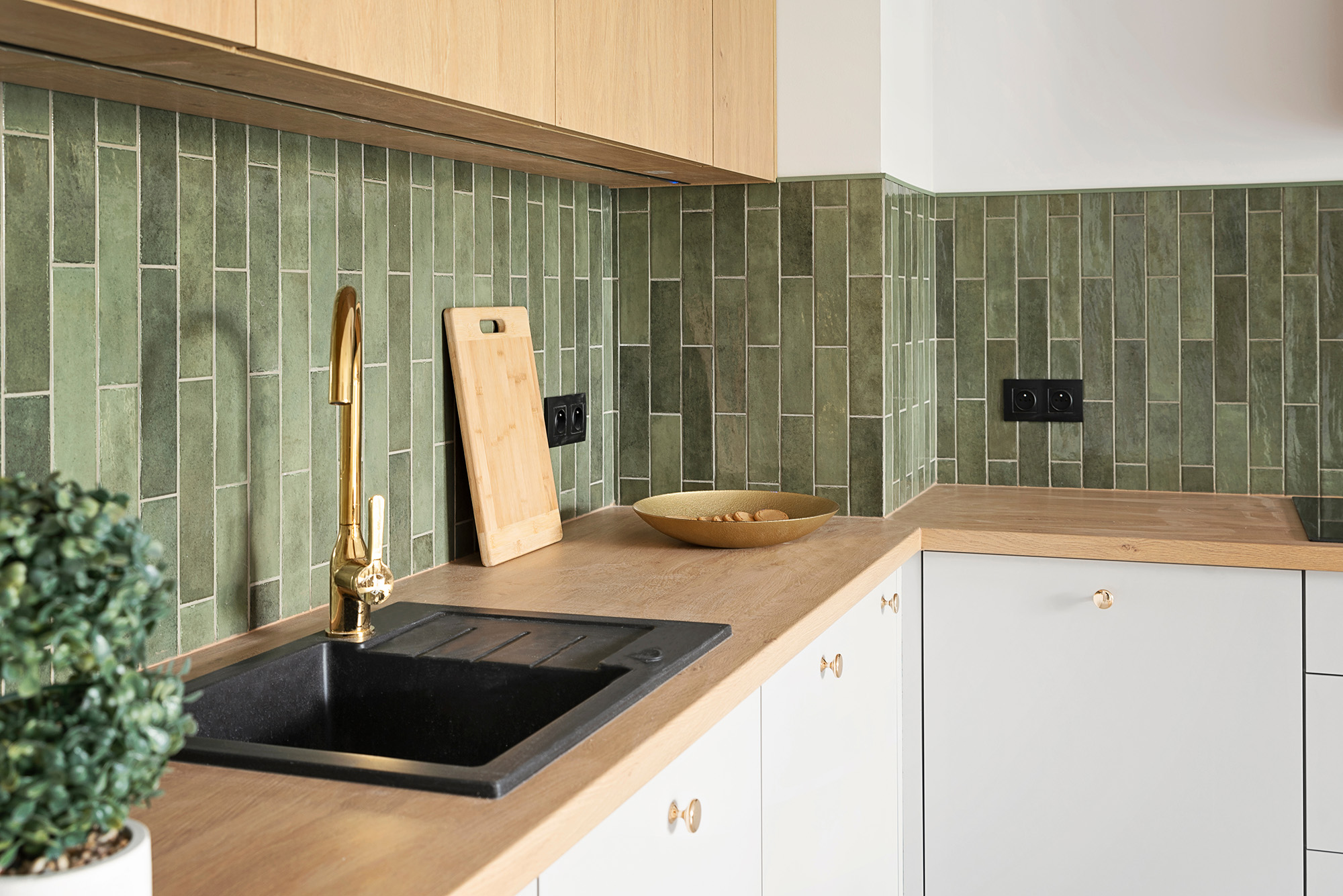
Subway tile does its best work in the high splash zone directly behind the sink and along the main prep run, where fewer joints simply means less upkeep. It also handles pattern well without adding grout, since running bond, stacked vertical, and herringbone layouts all use the same tile at the same joint count. Plenty of Central Valley kitchens end up using both, running subway through the working zone and reserving mosaic for one deliberate accent.
Grout and Sealer Choices That Close the Gap
The maintenance difference between the two formats narrows considerably with the right grout. Epoxy grout resists staining and mineral absorption far better than standard cementitious grout because it is not porous in the same way, which makes it worth serious consideration behind a sink regardless of tile size. The honest trade off is that epoxy is less forgiving to install, sets faster, and asks more of whoever is spreading it, so it is a conversation to have with your installer rather than a default.
If you go with cementitious grout, sealing it properly and resealing on a sensible schedule does most of the work. Grout color matters too. A mid tone grout hides mineral haze and everyday cooking film far better than bright white, which shows every deposit, or very dark grout, which can show light mineral residue just as clearly. Seeing a sample board under your own kitchen lighting settles this faster than any color chart.
Making the Call for Your Kitchen
The right answer usually comes down to where the water actually lands and how much upkeep you want to sign up for. Heavy cooks with a busy sink zone tend to be happiest with subway or another larger format through the splash areas. Anyone drawn to pattern and light can still have mosaic, placed thoughtfully and paired with a grout that stands up to local water. Most kitchens do well with a combination rather than committing the whole wall to one format.
Carpetland carries subway, mosaic, glass, and porcelain tile options for every part of a backsplash, and our team can talk through grout and sealer choices alongside the tile itself. We serve Stockton, and Modesto, CA from Stockton, or Modesto, CA, so contact us to bring samples home and see how they read under your own kitchen lighting.


