

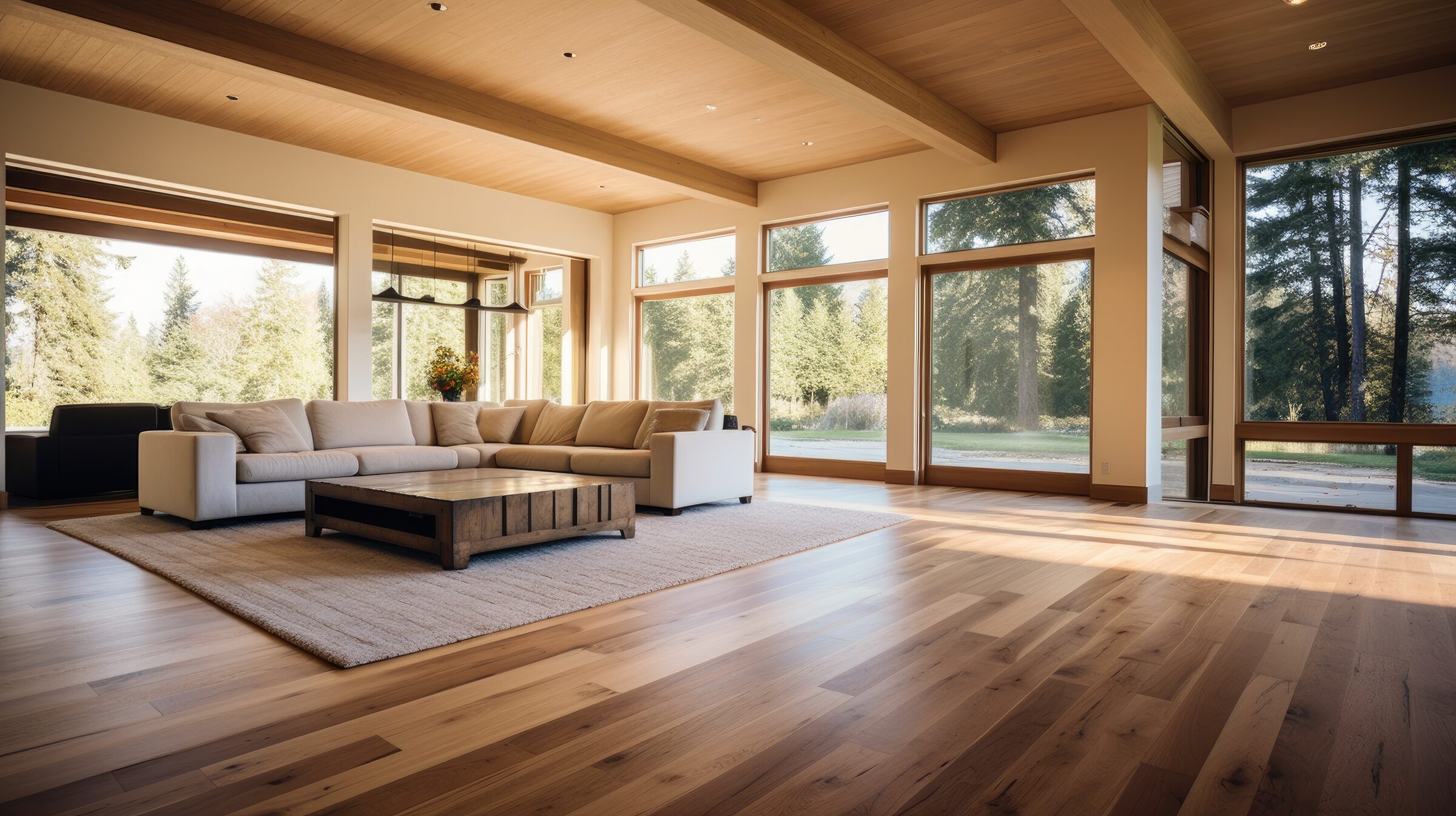
What Actually Changes When a Floor Ages
The common assumption is that sunlight bleaches a stained floor lighter. What actually happens is photo oxidation, a reaction between UV light, oxygen, and the natural compounds in the wood itself. The stain sitting on top is only part of the picture. The wood beneath it keeps reacting for years, and that reaction pushes the floor in a direction determined by the species, not by the color you chose.
The finish contributes as well. Oil based polyurethane ambers as it cures and continues warming over time, adding a yellow cast on top of whatever the wood is doing. Water based finishes stay clearer for longer. In the Central Valley, where homes commonly run long stretches of west facing glass and the sun season runs well past summer, all of this simply happens faster than it would in a cloudier climate.
How Different Species Drift in Different Directions
This is the part most stain guides skip. Red and white oak amber over time, drifting warmer and more golden. American cherry does something more dramatic, darkening and deepening into a rich reddish brown within the first couple of years. Walnut moves the opposite way, mellowing and lightening from deep chocolate toward a softer honey brown. Maple ambers noticeably, which shows up most on pale finishes. Hickory shifts more mildly than most.
The practical takeaway is that two floors stained the identical color on different species will not look the same in five years. A mid brown on walnut will lighten. The same mid brown on oak will warm and richen. Neither is a defect, and neither is avoidable, but knowing which way your specific floor travels lets you choose a starting tone that lands where you want it rather than drifting away from it.
Why Cool Toned Stains Carry the Most Risk Here
Grey and cool toned floors were everywhere for a decade, and they are the tones most likely to disappoint over a long stretch of Valley sun. The reason is mechanical rather than a matter of taste. A grey stain on oak is a cool pigment sitting over a species that ambers underneath it. As the oak warms, that yellow pushes up through the grey, and the floor drifts toward a muddy or slightly greenish cast rather than staying crisp.
Warm and mid tone stains have the opposite relationship with the wood. A honey, wheat, or warm mid brown on oak ages in the same direction the wood is already travelling, so the shift reads as the floor deepening rather than going off color. This is part of why the 2026 move back toward warmer natural tones holds up well in a high sun region, and it is worth weighing if you are choosing between a cool and a warm option.
Finish Sheen and the Details That Buy You Time
Sheen does not stop color change but it does change how much you notice it. Matte and low sheen finishes scatter light rather than reflecting it in a sharp band, which softens the visible line between a sun exposed area and a shaded one. High gloss does the reverse, throwing a bright reflection that makes any difference in tone across the floor far more obvious. That alone is a strong argument for the matte finishes currently dominating hardwood collections.
The other detail worth planning for is rug ghosting. An area rug shields the wood beneath it from UV, so the covered section keeps its original color while the exposed floor around it moves on. Lift the rug after a few years and the outline is visible. Rotating rugs and furniture periodically during the first couple of years lets the floor age more evenly, and UV filtering window film on the worst exposed glass slows the whole process down.
Choosing a Tone You Will Still Like in Ten Years
The most reliable approach is to choose a stain in the direction your species is already heading rather than one working against it, then pair it with a low sheen finish that keeps the change subtle. For rooms with genuinely punishing all day sun exposure, it is also fair to consider whether a printed or through body product like laminate or tile suits that specific space better, since those do not photo oxidize the same way. That is a room by room question, not a reason to rule hardwood out.
Carpetland carries solid and engineered hardwood across a full range of species and stain tones, and our team can walk through how a particular sample is likely to age in your rooms. We serve Stockton, and Modesto, CA from Stockton, or Modesto, CA, so contact us to compare tones against your own light before you commit.


