
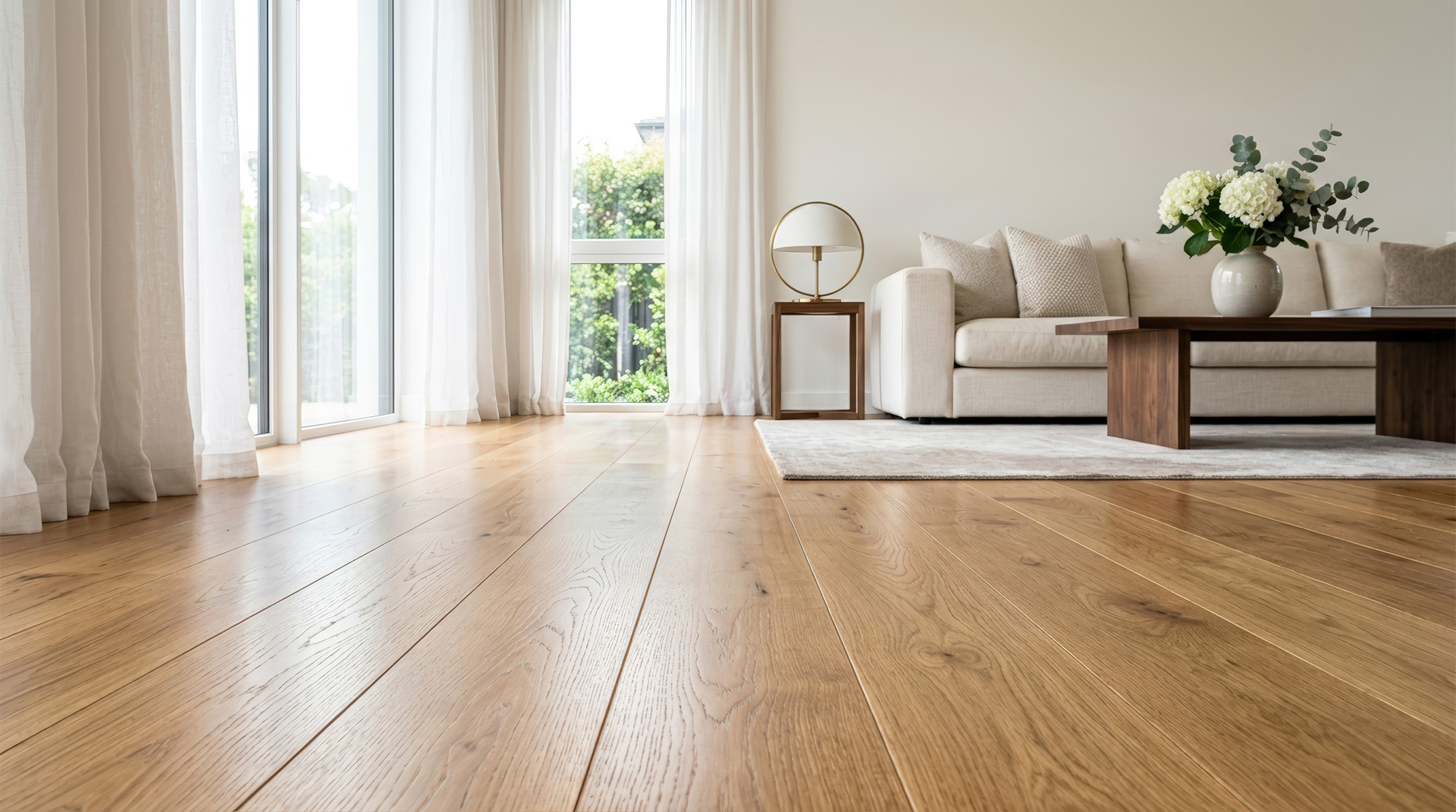
Why Wear Layer Is the Spec That Actually Matters
Engineered hardwood is a real wood veneer bonded to a stable core, and the thickness of that veneer, called the wear layer, is the single most useful number on the spec sheet. It is measured in millimeters and it determines one thing above all others, which is whether the floor can ever be sanded and refinished. A thin veneer cannot take a sanding without cutting through to the core. A thicker one can usually handle at least one refinish, sometimes more.
This matters more in a family home than anywhere else, because a busy floor will eventually want a refresh rather than a replacement. The exact thickness that allows refinishing is set by the manufacturer and published in their specifications, so it is worth asking for that figure directly rather than assuming. Two products that look identical on a display board can differ substantially here, and that difference only shows up years later when you want to sand out a decade of living.
The Difference Between Refinishable and Scratch Resistant
Here is the misunderstanding that costs people money. Wear layer thickness does not make a floor resist scratches. The factory finish does that. Most quality engineered hardwood uses a UV cured urethane with aluminum oxide suspended in it, and that coating is what stands between a dog's claws and the wood. A floor with a thick wear layer and a weak finish will scratch readily. A floor with a thin veneer and an excellent finish will resist marks beautifully but can never be sanded.
So you are really buying two things at once. The finish determines how the floor looks day to day. The wear layer determines what your options are in year twelve. Families with pets and children generally want both, which usually means asking about the finish warranty and the veneer thickness as separate questions. The species underneath still matters for denting rather than scratching, since a dropped pan behaves differently on hickory than on walnut.
What the Core Underneath Is Doing
Below the veneer sits either a plywood core or a high density fiberboard core, and they behave differently. Plywood cores are built from cross laminated plies, and more plies generally means better dimensional stability, which is worth having in a climate that swings as hard as ours does between wet winters and bone dry summers. HDF cores are denser and harder underfoot, which can help with dent resistance, though they tend to be less tolerant of moisture and are rarely refinishable.
Ply count is a fair question to ask and is often printed on the specification sheet. The other construction detail worth knowing is how the veneer itself was cut. Sawn veneer is cut like a board and shows grain the way solid wood does. Rotary peeled veneer is shaved off a spinning log, which is efficient but can produce a repeating, slightly plywood like grain pattern that becomes noticeable across a large open floor. In a great room with long sight lines, that difference is visible.
Bevel Edge and Plank Width in a Busy House
Edge treatment sounds cosmetic and is not. A micro beveled edge creates a small groove between planks, which forgives minor subfloor variation and hides the slight height differences that develop in any floor over time. A square or flush edge looks seamless and more contemporary, but it shows every imperfection underneath and is less forgiving in a home where the slab is not perfectly flat. The trade off is that bevels do collect grit, which means they want sweeping rather than just a mop.
Plank width works the same way. Wider planks look current and read beautifully in open plan Central Valley homes, but a wider board moves more across the seasons than a narrow one, so any seasonal gapping shows up more visibly. None of this makes wide planks a poor choice. It means a wider board asks a bit more of your indoor humidity and your installer's acclimation process, which is a reasonable conversation to have before ordering.
Choosing for the Way Your Family Actually Lives
The short version is that wear layer buys you future options, finish buys you day to day appearance, core construction buys you stability, and bevel and width decide how forgiving the floor is about everything else. A household with young children, pets, and a lot of foot traffic through the main living areas is usually best served by a thicker veneer and a strong factory finish together rather than optimizing for one. In the wettest rooms of the house, laundry and full bathrooms especially, tile and laminate remain sensible options worth comparing side by side.
Carpetland carries engineered hardwood across a wide range of constructions, and our team can pull the wear layer, core and finish specifications for anything on the floor so you can compare like for like. We serve Stockton, and Modesto, CA from Stockton, or Modesto, CA, so contact us to see samples and ask the specification questions that matter before you choose.